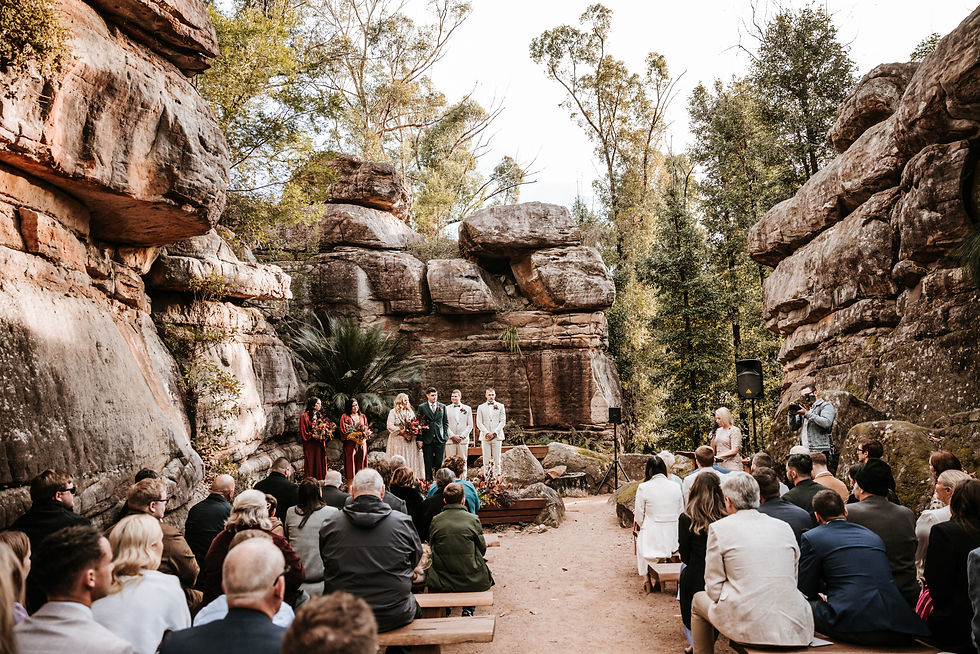
Outdoor vs Nature-Led vs Retreat Weddings Explained
Updated: Sep 28
A lot of couples use the terms outdoor, nature-led, and retreat almost interchangeably.
That is understandable.
They all suggest a wedding that feels:
less boxed in
less conventional
more scenic
more grounded
or more experience-led than a standard reception format
But they do not mean the same thing.
And once couples start looking at venues, that confusion can become a real problem.
Because a venue can be:
outdoor without being
nature-led
A venue can feel:
nature-led without being
retreat-style
And a retreat wedding can include:
outdoor and nature-led elements while still being something structurally different again
This matters because the wrong label often leads couples into the wrong search.
They may think they want:
an outdoor wedding
when they actually want:
a wedding deeply shaped by place
Or they may think they want:
a retreat wedding
when what they really want is:
a strong one-day wedding in a beautiful natural setting with a little more breathing room
That is why these distinctions matter.
This guide is here to help make them clearer.
By the end, you should feel clearer on:
what each of these three wedding types usually means
how they differ in feel and format
how they change guest experience and logistics
what couples are often really looking for
and which model may best suit the celebration you want to create
Quick answer: what is the difference between outdoor, nature-led, and retreat weddings?
Outdoor weddings focus mainly on where the wedding happens. Nature-led weddings focus on how the setting shapes the experience. Retreat weddings focus on shared time, staying, and a more immersive format. A wedding can overlap across these categories, but they are not the same thing.
That distinction helps immediately.
Outdoor is primarily about location and setting
Nature-led is primarily about atmosphere and how place influences the wedding
Retreat is primarily about structure, rhythm, and the shared experience across more than one event window
A wedding might be:
outdoor and nature-led
nature-led and retreat-style
or outdoor without really being either of the other two
The useful question is not: Which label sounds nicest?
It is: What kind of wedding experience are we actually trying to create?
Why these three wedding types are often confused
These categories get blurred because they all sit outside the most standard venue model.
They all imply a wedding that feels:
more open
more memorable
more scenic
or more connected than a basic venue-hire format
They also share some visual cues.
Couples may imagine:
trees
views
cabins
a bush cathedral
open air
relaxed styling
guests staying over
and a more immersive atmosphere
Those images can belong to all three models.
But the underlying logic is different.
Outdoor wedding
The key idea is usually:
the wedding happens outside
Nature-led wedding
The key idea is usually:
the setting shapes the emotional tone of the wedding
Retreat wedding
The key idea is usually:
the wedding becomes a fuller shared experience through time, staying, and inhabiting the place
This is why the categories overlap visually but still need to be distinguished conceptually.
Three wedding types people often blur together
Outdoor describes where key parts of the wedding happen
Nature-led describes how place shapes the wedding
Retreat describes how the celebration is structured and experienced over time
A venue may fit more than one category, but the categories are still useful
What an outdoor wedding usually means
An outdoor wedding usually means that one or more key parts of the wedding happen outside.
That may include:
the ceremony
drinks
reception
or sometimes the whole celebration
The appeal is often immediate.
Outdoor weddings usually offer:
fresh air
scenic beauty
natural light
openness
and a stronger sensory connection to the surroundings
That can make them feel:
more spacious
more romantic
more atmospheric
and more memorable than a purely indoor format
But outdoor does not automatically mean:
immersive
place-led
or retreat-style
A wedding can be outdoor and still feel:
very event-led
highly structured
and only loosely connected to the environment beyond the ceremony backdrop
That is why outdoor is best understood as a setting format rather than a complete wedding philosophy.
What outdoor usually prioritises
open-air ceremony or celebration
scenery and light
sensory atmosphere
less traditional room-based feeling
Main watchout
Beauty can outpace usability if comfort, weather readiness, and full-day flow are not strong.
What a nature-led wedding usually means
A nature-led wedding goes further than simply being outside.
It means the place is doing real emotional work.
The wedding is not only happening in a natural setting. It is being shaped by that setting.
That often affects:
atmosphere
pace
tone
styling restraint
emotional grounding
and how the ceremony and celebration feel in use
A nature-led wedding usually feels:
more connected to place
less artificial
less imposed on the setting
and more like the environment is part of the experience, not just behind it
This is where couples often confuse:
natural-looking with
genuinely nature-led
A wedding can have:
wild florals
earthy styling
timber textures
soft palettes
and still not feel strongly connected to place.
By contrast, a simply styled wedding in the right setting can feel deeply nature-led because:
the landscape shapes the mood
the setting carries the atmosphere
and the day feels grounded in where it is happening
What nature-led usually prioritises
place
grounding
atmosphere
immersion
emotional connection to setting
Main watchout
Couples often confuse it with styling alone.
What a retreat wedding usually means
A retreat wedding is not only about scenery or being outside.
It is usually about structure and shared time.
A retreat wedding often involves:
staying on-site or nearby
a slower rhythm
a welcome or arrival layer
a main wedding day
and sometimes a day-after farewell or softer ending
The defining feature is not just the venue itself.
It is that the celebration feels:
more inhabited
more connected
more immersive
and less compressed into a single event block
This can change the wedding significantly.
A retreat-style format often allows for:
gentler arrival
more guest connection
easier late-night logistics
stronger morning-after closure
and a more shared feeling overall
What retreat usually prioritises
accommodation
shared time
slower pace
multi-part experience
connection across more than one event window
Main watchout
Not every wedding needs this, and not every guest group benefits from it equally.
How these wedding types differ in atmosphere and feel
This is where the comparison becomes especially useful.
Outdoor weddings often feel
open
scenic
airy
visually persuasive
and ceremony-led
Nature-led weddings often feel
grounded
immersive
emotionally resonant
place-shaped
and less artificial
Retreat weddings often feel
inhabited
connected
slower
more shared
and more like a temporary world people are inside together
These differences matter because couples are often not only choosing:
a setting
They are choosing:
a kind of emotional experience
Comparison table
Wedding Type | Core Idea | What It Usually Prioritises | Main Watchout |
Outdoor wedding | Key parts happen outside | Open air, scenery, ceremony atmosphere | Beauty can outpace usability |
Nature-led wedding | The setting shapes the whole experience | Place, grounding, atmosphere, immersion | Couples can confuse it with styling alone |
Retreat wedding | The celebration unfolds with shared time and staying | Connection, accommodation, slower rhythm, multi-part experience | Not every guest group or format needs it |
This table usually reveals that couples are not only comparing venues. They are comparing experience models.
How they differ in guest experience and logistics
This is where the categories often become most practical.
Travel and access
Outdoor and nature-led weddings may be:
local
regional
or destination-like
Retreat weddings more often make travel part of the structure, because staying usually matters more.
Accommodation
Outdoor weddings do not necessarily need accommodation. Nature-led weddings may or may not. Retreat weddings often rely on accommodation more heavily because the format gains value through shared time and staying.
Comfort and movement
Outdoor weddings often place more pressure on:
weather
shelter
seating
and movement
Nature-led weddings can do the same, but ideally with stronger alignment between setting and experience.
Retreat weddings can reduce some pressures through:
staying on site
gentler arrival
and less abrupt departure
Arrival and departure
Retreat weddings are often strongest when:
arrival is softened
departure is less rushed
and the celebration does not begin and end cold
Outdoor and nature-led weddings may still be one-day formats, where arrival and departure pressure stay more concentrated.
This is why the three models do not only look different. They feel different in use.
Which kind of venue usually suits each one best
This is where category clarity becomes very helpful.
Outdoor weddings often suit
strong garden venues
hybrid indoor-outdoor venues
outdoor-capable estates
ceremony-led scenic venues
Nature-led weddings often suit
bushland venues
forest or escarpment settings
place-led regional properties
venues where the environment is part of the emotional tone, not just the backdrop
Retreat weddings often suit
accommodation-led venues
stay-based regional properties
bush retreats
venue properties with multiple spaces and shared-time potential
This does not mean a venue belongs to only one category.
A single venue may be:
outdoor
nature-led
and retreat-style
But it helps to know which of those is really the venue’s strongest logic.
That tells you what kind of wedding it is best placed to support.
What couples are often really looking for when they use these terms
This is one of the most useful clarifications in the whole page.
What couples often really mean when they use these terms
We want less event-box feeling
We want more connection to place
We want more shared time
We want the wedding to feel more grounded
We want the venue to shape the experience, not just frame it
That means couples are often not really searching for:
a label
They are searching for:
a feeling
Sometimes that feeling is:
openness
Sometimes:
grounding
Sometimes:
more time together
Sometimes:
less artificiality
Sometimes:
a wedding that feels more lived in than staged
Understanding that makes venue selection much clearer.
Because once you know what you are actually after, the category confusion starts to drop away.
A simple framework for choosing between them
Use this framework when narrowing which model actually suits your wedding.
Category | What to Assess | Better Question |
Setting | How much the environment matters | Do we just want to be outside, or do we want place to shape the wedding? |
Structure | One-day or shared-time format | Are we choosing a setting or a more immersive wedding format? |
Guest experience | Travel, comfort, staying, movement | What will guests actually experience in this model? |
Venue fit | What type of venue supports the idea best | Does the venue match the wedding type we think we want? |
Emotional tone | Formal, grounded, scenic, shared | What do we actually want the wedding to feel like? |
Overall fit | Practical and emotional alignment | Which model best fits the celebration we are trying to create? |
A quick wedding-type test
We mainly care that the ceremony and celebration happen outside
We want the landscape to shape the emotional tone of the day
We want guests to stay and share more than one event window
We care about whether the venue feels inhabited, not just scenic
We are trying to choose the right experience model, not just the nicest label
Frequently asked questions
What is the difference between an outdoor wedding and a nature-led wedding?
An outdoor wedding is mainly about where the wedding happens. A nature-led wedding is about how the setting shapes the atmosphere, tone, and lived experience of the celebration.
Is a retreat wedding the same as a destination wedding?
Not exactly. A retreat wedding often shares some destination-like features, but the key idea is shared time, staying, and a more immersive structure rather than travel alone.
Can a wedding be both nature-led and retreat-style?
Yes. Many retreat weddings are also nature-led, especially when the setting strongly shapes the emotional experience of the celebration.
Do outdoor weddings always need accommodation?
No. Some outdoor weddings work beautifully as one-day celebrations. Accommodation matters more when travel is significant or the celebration is intended to feel more shared and immersive.
What do couples often misunderstand about retreat weddings?
They often assume retreat simply means accommodation. In reality, retreat is more about structure, shared time, and how the whole celebration is experienced.
Which type of wedding is best for a more immersive experience?
Usually a retreat-style wedding, especially when it is supported by strong accommodation, shared-time logic, and a setting worth inhabiting.
Final thought
These three wedding types overlap, but they are not interchangeable.
That is the key thing to keep in mind.
Because the best decision is rarely about choosing the label that sounds nicest.
It is about choosing the model that genuinely fits:
the atmosphere you want
the guest experience you want to create
and the way you want the celebration to unfold
If you are narrowing now, one of the most useful questions you can ask is:
Are we really looking for an outdoor wedding, a nature-led wedding, or a retreat-style experience?
That question usually makes the next step much clearer.
Download the Outdoor Readiness Checklist
Use it to assess whether the venue can genuinely support the kind of outdoor or nature-led wedding you are considering.

For the broader decision framework, explore our Outdoor, Nature & Wilderness Weddings guide.
Read next:


Continue your planning
Go deeper with our guides to nature-inspired weddings and forest and bushland wedding venues.
If a private nature-led retreat feels closest to what you want, explore outdoor weddings at KVBR.